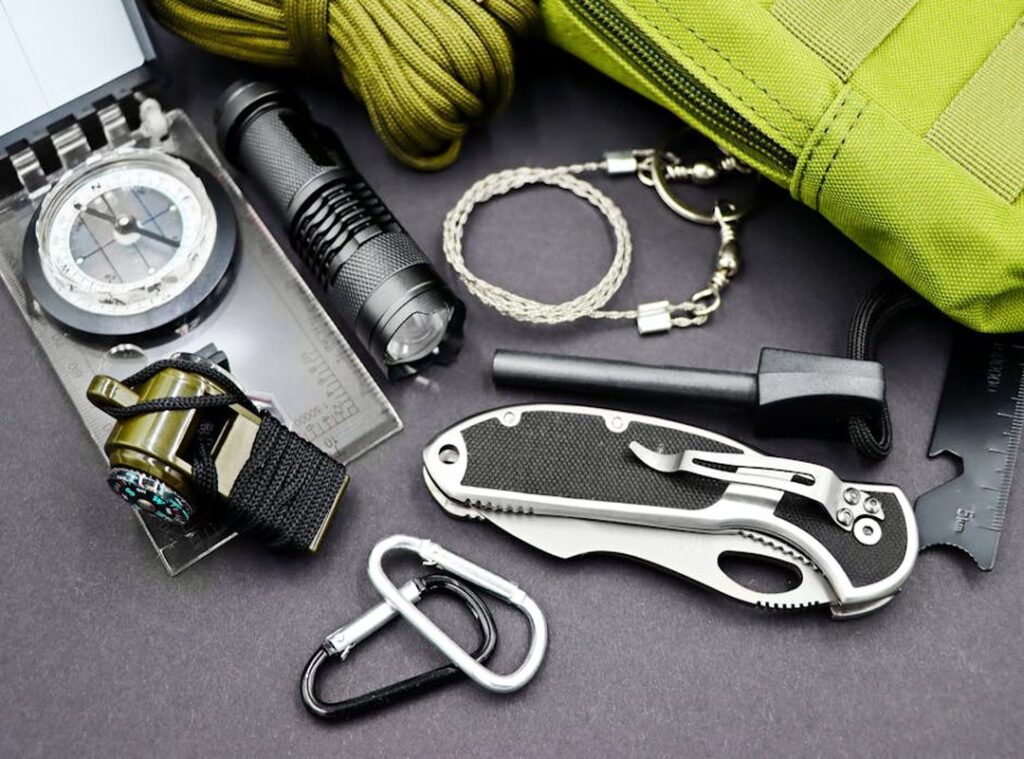
Every outdoor enthusiast knows the struggle: packing essential survival gear without ending up with a bulky, overstuffed pack that slows you down. The real challenge isn’t choosing what to leave behind—it’s learning how to create more room with what you already carry. True efficiency comes from smarter systems, not sacrifice. Drawing on field-tested principles refined through extensive wilderness exploration, this guide reveals survival gear space saving hacks that go far beyond rolling clothes or stuffing gaps. You’ll discover practical, non-obvious strategies that fundamentally change how you organize, compress, and carry your gear—so you move lighter without leaving essentials behind.
The “Containerize Everything” Philosophy
As you streamline your backpack with these 10 survival gear hacks, you’ll have more room to pack essentials for your adventure—perhaps even a visit to the breathtaking Lake Yiganlawi – for more details, check out our How Big Is Lake Yiganlawi.
The core idea is simple: treat every hollow item as usable storage. In gear terms, a container is any object with internal volume that can safely hold other items. That means bottles, pots, tubes, and even handles. No empty space is wasted. When pack weight and bulk matter, this mindset turns clutter into structure.
Turn Dead Space Into Functional Storage
A stainless steel water bottle, for example, isn’t just for hydration. Its rigid walls protect delicate contents from crushing. Store a compact fire-starting kit—ferro rod, tinder tabs, waterproof matches—inside, wrapped in a bandana to prevent rattling. The benefit? Protection, insulation, and multi-use fabric in one move.
Wrap 10–15 feet of duct tape or Gorilla Tape around that same bottle or even a lighter. You eliminate the bulky core of a full roll while keeping repair capability accessible. (Future-you will be grateful when a tent seam splits.)
Small items like purification tablets, spices, or medication fit neatly into empty chapstick tubes or old 35mm film canisters. These seal tightly, resist moisture, and prevent loss at the bottom of your pack.
Some argue this adds complexity. Fair. But smart survival gear space saving hacks reduce redundancy and improve load efficiency—critical when every ounce counts.
Multi-Use Gear: The Ultimate Space Saver

The real breakthrough in packing light isn’t buying smaller gear—it’s adopting a new mindset. Every item should serve at least two purposes. In other words, redundancy is the enemy. When you reduce overlap, you gain space fast (and suddenly your pack stops feeling like a bag of bricks).
Some argue that specialized tools perform better and that multi-use gear is full of compromises. That’s fair. A dedicated rain jacket may breathe better than a poncho. A fixed shelter may outperform a tarp. However, in backcountry scenarios where weight and volume matter, versatility often beats specialization.
Take the poncho tarp. Unlike a standard rain jacket, a military-style poncho doubles as emergency shelter or ground cloth. Instead of packing rain gear and a backup tarp, you carry one item. That’s efficiency in action.
Similarly, a shemagh or bandana is deceptively powerful. It can pre-filter water, function as a bandage or sling, shield your head from sun, act as a signaling flag, or serve as a pot holder. Few items offer that much flexibility per ounce.
Then there’s paracord. Most see rope; experienced trekkers see potential. The inner strands can become fishing line, sutures, or sewing thread. It’s not just cordage—it’s a compact repair and procurement kit.
Finally, choose a ferro rod with a built-in multi-tool striker. When your fire starter also includes a bottle opener or hex wrench, you consolidate tools seamlessly.
These survival gear space saving hacks aren’t about cutting corners. They’re about carrying smarter so every inch of your pack earns its place.
Mastering Compression and Organization
Beyond simply stuffing gear into your pack, the real win comes from physically reducing volume. Think less “overpacked suitcase,” more “precision-engineered carry-on.” If you want your load lighter, tighter, and quieter on the trail, start here.
Technique 1 – Compression Sacks
First, fold and roll bulky items like sleeping bags and insulated jackets before placing them into a compression sack. Many hikers just shove and cinch (we’ve all done it), but pre-rolling removes trapped air and creates uniform density. Once inside, tighten straps gradually and evenly. This method can reduce soft gear volume by up to 30–50%, depending on fill type (Outdoor Industry Association data).
Some argue compression damages insulation over time. That’s true for long-term storage. However, for short trips, the space savings outweigh the risk. Just decompress gear at camp.
Technique 2 – Vacuum Sealing
For spare socks, base layers, and medical supplies, use a home vacuum sealer. This makes items 100% waterproof and dramatically compact. It’s one of the smartest survival gear space saving hacks because it protects and compresses at once. Pro tip: pack sealed items you won’t need until later in the trip.
Technique 3 – Ranger Rolling
- Lay the shirt flat.
- Fold sleeves inward.
- Fold bottom hem up 2–3 inches.
- Roll tightly from the collar down.
- Tuck the roll into the hem pocket.
This prevents unspooling mid-hike (no clothing explosion when you grab a snack).
The “Tetris” Method
Finally, pack like a puzzle. Place hard, dense items first. Then use rolled clothing to fill every gap. There should be zero “dead air.”
And while you’re optimizing space, review your diy repairs for common camping equipment failures so broken gear doesn’t sabotage your system.
Wearable Storage Strategy
First, think of your body as real estate. Pack storage versus wearable storage is strategy. With cargo pockets, you assign roles: knife in the right, compass or map in the left, fire kit sealed and ready. Compared to digging through a pack, that’s seconds versus minutes (tinder versus soaked frustration). Meanwhile, a belt kit can shift essentials—multi-tool, fixed blade, even a bottle—off your shoulders. Belt versus backpack carry means weight on hips, not spine. Finally, a neck lanyard keeps a whistle, LED, or ferro rod accessible if your pack disappears. These survival gear space saving hacks work.
A Lighter Pack, A Sharper Mind
You set out to solve a frustrating problem: how to carry everything you need without feeling weighed down by it. Now you have the advanced techniques to pack more gear into less space—boosting both your capability and your mobility on the trail.
The false choice between being well-equipped and being agile was never real. By applying a mindset of multi-functionality, aggressive compression, and using every inch of available space, you turn limitations into advantages. That’s the power behind survival gear space saving hacks.
Don’t wait for your next trip. Repack your gear today using these principles and feel the difference immediately.
 Elvric Xelvaris is the kind of writer who genuinely cannot publish something without checking it twice. Maybe three times. They came to wilderness exploration strategies through years of hands-on work rather than theory, which means the things they writes about — Wilderness Exploration Strategies, Horizon Headlines, Jaroconca Trekking Guides, among other areas — are things they has actually tested, questioned, and revised opinions on more than once.
That shows in the work. Elvric's pieces tend to go a level deeper than most. Not in a way that becomes unreadable, but in a way that makes you realize you'd been missing something important. They has a habit of finding the detail that everybody else glosses over and making it the center of the story — which sounds simple, but takes a rare combination of curiosity and patience to pull off consistently. The writing never feels rushed. It feels like someone who sat with the subject long enough to actually understand it.
Outside of specific topics, what Elvric cares about most is whether the reader walks away with something useful. Not impressed. Not entertained. Useful. That's a harder bar to clear than it sounds, and they clears it more often than not — which is why readers tend to remember Elvric's articles long after they've forgotten the headline.
Elvric Xelvaris is the kind of writer who genuinely cannot publish something without checking it twice. Maybe three times. They came to wilderness exploration strategies through years of hands-on work rather than theory, which means the things they writes about — Wilderness Exploration Strategies, Horizon Headlines, Jaroconca Trekking Guides, among other areas — are things they has actually tested, questioned, and revised opinions on more than once.
That shows in the work. Elvric's pieces tend to go a level deeper than most. Not in a way that becomes unreadable, but in a way that makes you realize you'd been missing something important. They has a habit of finding the detail that everybody else glosses over and making it the center of the story — which sounds simple, but takes a rare combination of curiosity and patience to pull off consistently. The writing never feels rushed. It feels like someone who sat with the subject long enough to actually understand it.
Outside of specific topics, what Elvric cares about most is whether the reader walks away with something useful. Not impressed. Not entertained. Useful. That's a harder bar to clear than it sounds, and they clears it more often than not — which is why readers tend to remember Elvric's articles long after they've forgotten the headline.