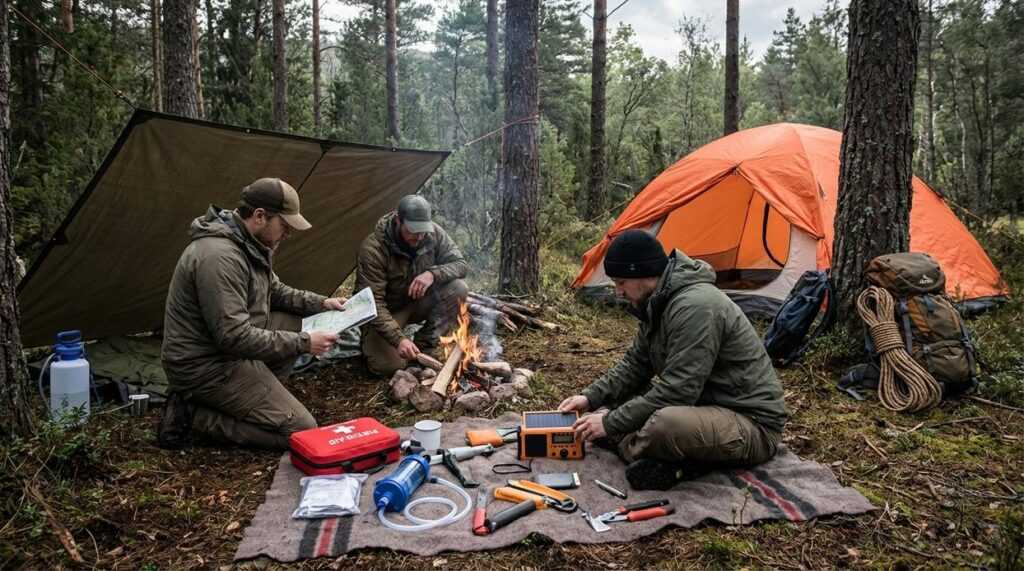
In a true survival situation, versatility is everything—and few tools are as adaptable as paracord. Yet most people carry it without fully understanding its life-saving range beyond basic rope tasks. The real danger lies in overlooking its potential as a fire starter, fishing aid, shelter builder, or even a first-aid resource. This guide reveals the most practical and field-tested paracord emergency uses that can dramatically increase your chances of staying safe in the wild. Built on extensive real-world wilderness experience, this article delivers clear, actionable techniques designed to help you unlock paracord’s full survival potential when it matters most.
Building Your Immediate Shelter and Camp
From crafting makeshift shelters to securing gear during island hopping adventures, paracord proves to be an invaluable asset in emergency situations that can arise while exploring remote coastal destinations – for more details, check out our Island Hopping Adventures: Planning Remote Coastal Trips.
When the weather turns grumpy and daylight starts clocking out, shelter comes first. A tarp ridgeline is your fastest ticket to dry socks and better morale. Stretch paracord between two sturdy trees and secure it with a trucker’s hitch (a mechanical advantage knot that lets you cinch the line tight) or a taut-line hitch (an adjustable loop that slides but grips under tension). The goal? A ridgeline so tight it hums like a guitar string—because saggy tarps collect rainwater, and nobody enjoys an indoor waterfall.
Lashing for a Lean-To
But what if you forgot your tarp? First, breathe. Second, start lashing. Use square lashing (binding two poles at right angles) and finish with friction wraps to prevent wobble. A simple A-frame or lean-to can block wind and trap warmth. Think primitive architecture—less HGTV, more “I survived the night.” Pro tip: choose deadfall wood when possible to avoid damaging live trees.
Next, organize your camp like you actually plan to find things later. Run a drip line beneath your shelter to hang wet gear. It’s one of those underrated paracord emergency uses that feels genius at 2 a.m. Likewise, rig a bear bag line to hoist food at least 10–15 feet high and 4 feet from the trunk (National Park Service guidelines). Raccoons are basically tiny bandits with paws.
Finally, if the ground is soaked, weave cord into an improvised hammock or suspend a blanket. Elevated sleep keeps you warmer by reducing conductive heat loss (CDC cold-weather guidance). And while you’re at it, consider upgrading your first aid kit for remote adventures—because blisters don’t care how cool your knots are.
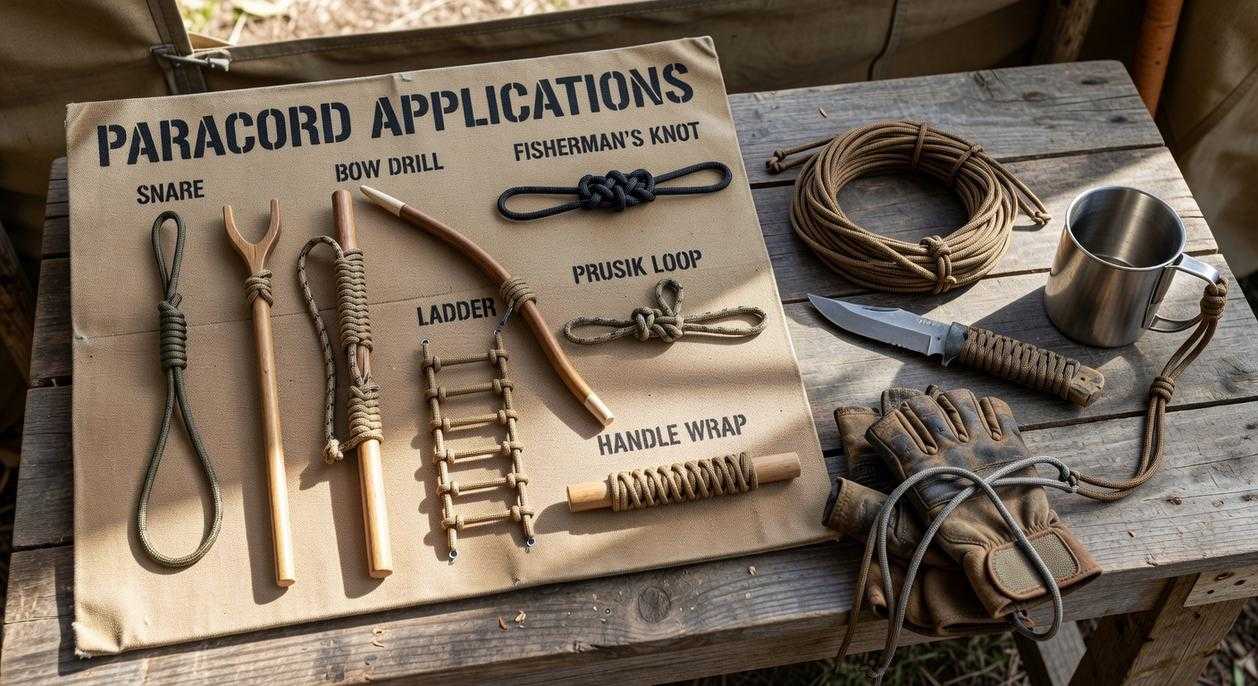
Bow Drill Fire Starting demands patience, but in my experience, it’s the most dependable primitive method when matches are gone. A bow drill is a friction-based system—meaning it creates heat by rubbing wood on wood until you form a coal (a small, glowing ember). The set has four parts: a spindle (the vertical stick you spin), a fireboard (the baseboard that collects hot dust), a handhold (a socket stone or hardwood cap), and a bow strung with paracord. Paracord’s sheath grips the spindle well, which is why I rank it high among paracord emergency uses. With steady strokes and firm downward pressure, you’ll see smoke, then a coal. Nurture it into tinder like you’re handling the One Ring—carefully.
Next, consider fishing with the inner strands. Standard 550 paracord contains seven to nine nylon cores. These “guts” are thin yet surprisingly strong (often rated around 50 pounds collectively, per manufacturer specs). Separate them, tie to a makeshift hook—think a soda can tab bent into shape, a thorn, or carved hardwood—and you’ve got a workable hand line.
Meanwhile, a simple fixed-loop snare can secure small game. Use an inner strand to form a sliding loop attached to a bent sapling trigger. Check local regulations; snares are for genuine survival only.
Finally, string a low tripwire around camp, clipped to cans or sticks. It’s low-tech, yes—but effective. Sometimes simple beats flashy gear.
Pro tip: keep your cordage dry, because moisture reduces friction efficiency and weakens natural fiber triggers overnight.
Practice beforehand. Seriously. Always.
First Aid and Self-Rescue Applications
When things go wrong outdoors, knowing practical paracord emergency uses can mean the difference between controlled response and outright panic. The real benefit? You gain TIME, STABILITY, and a fighting chance to reach safety.
Immobilizing a Limb with a Splint: In a fracture or severe sprain, paracord securely lashes rigid sticks alongside the injured limb. This limits movement, reduces pain, and helps prevent further tissue damage during evacuation. Stabilization protects blood vessels and nerves (which you definitely want intact).
Making a Tourniquet (LAST RESORT ONLY): For life-threatening extremity bleeding when direct pressure fails, wrap paracord 2–3 inches above the wound, tie a firm knot, place a sturdy stick (windlass) on top, and twist until bleeding stops. Secure the windlass to maintain pressure. The advantage is clear: RAPID blood-loss control can save a life. Pro tip: note the time of application.
Creating a Sling or Swathe: Tie a supportive sling to immobilize an injured arm against the torso. Reduced movement means less pain and lower risk of aggravating the injury.
Emergency Suture: Inner strands, sterilized by boiling water or flame, can assist with wound closure in dire situations. Not ideal—but sometimes survival isn’t about ideal. It’s about POSSIBLE.
Improvised Gear Repair and Utility Tools
Nothing tests your patience faster than a snapped bootlace five miles into a trek. Suddenly every step feels like a slapstick scene from a survival reality show (and not the fun kind). That’s where paracord shines. Swap it in for broken laces or use it to secure a torn backpack strap—it’s tougher, more abrasion-resistant, and far less likely to fail when you’re already exhausted.
Then there’s the classic annoyance: pants that won’t stay up after your belt gives out. Instead of constantly readjusting, braid a quick belt or even suspenders. It’s simple, sturdy, and surprisingly comfortable.
If you need reach or protection, lashing a knife to a pole creates a makeshift spear. Wrap tightly and finish with firm knots so it won’t slip under pressure.
In a pinch, paracord can even act as a friction saw for soft wood or PVC. These paracord emergency uses turn frustration into function.
Your Cordage is Your Confidence
You came here to understand how simple cordage becomes survival power—and now you see how paracord emergency uses transform uncertainty into control. The real risk is being unprepared when it matters most. Don’t wait for that moment. Equip yourself with top-rated, field-tested paracord and practice today—because confidence in the wild starts with what’s in your pack.