You know that feeling when you’re miles deep in the wilderness and suddenly think, “What if something goes wrong?” Yeah, I’ve been there too. The endless gear lists and survivalist hype? Overwhelming.
After years guiding treks through unpredictable terrain, I’ve learned what gear truly matters. Forget the fluff. It’s about everyday items survival (things) that actually work when put to the test.
That’s what I’m offering here: a no-nonsense guide focusing on important items. I promise, by the end, you’ll have a layered system that builds confidence for any adventure. Ready to cut through the noise?
Let’s get into it.
The First Important: A Prepared Mindset
When it comes to survival, the most key gear isn’t something you can stuff in a backpack. It’s a calm, resourceful mind. Ever heard of S.T.O.P.?
It’s a mental system: Stop, Think, Observe, Plan. This isn’t just some cute acronym; it’s a lifeline. You know when something unexpected hits, and your first instinct is to panic?
Why is this mindset so key? Well, if you’re mentally prepared, you can use your physical gear more effectively. It’s like having a secret weapon that lets you explore more confidently.
S.T.O.P. gives you a moment to breathe (literally), preventing a minor issue from becoming a full-blown emergency.
Even with improving shelter minimal gear, your brain is the real MVP. Everyday items survival skills start here. So next time you’re out there, remember: your mindset might just be your best companion.
Your Everyday Carry: Tools You Can’t Forget
When it comes to survival, some everyday items become non-negotiable. I’ve learned that if you’re separated from your main pack, these essentials can mean the difference between comfort and chaos. First up, navigation.
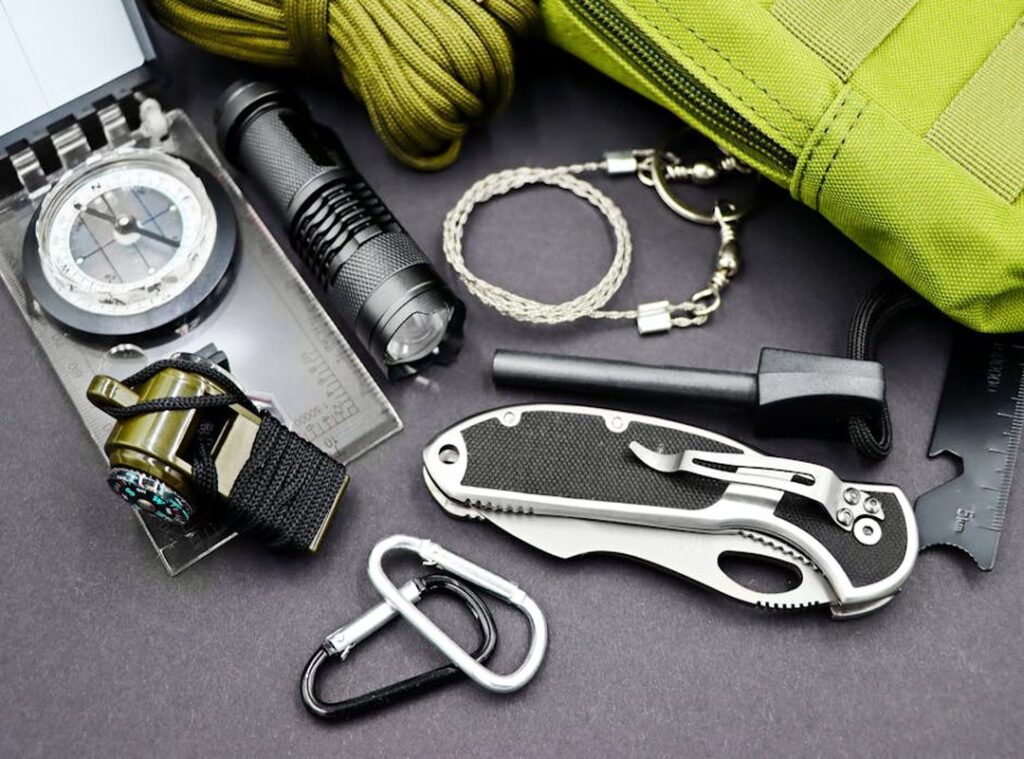
You need a quality magnetic compass and a physical map. Why? Because electronics fail.
Trust me, I’ve seen it happen. Out in the wild, your GPS can become a useless brick.
Next, fire. Forget lighters. A ferrocerium rod, paired with some waterproof tinder, is more reliable.
You can spark a fire even in the rain. It’s a lifesaver when you’re cold and need warmth fast. Then there’s the cutting tool.
A sturdy, high-quality folding knife is indispensable. You can make feather sticks or repair gear. It’s amazing how often a knife becomes the hero of the day.
And let’s not ignore signaling. A loud, pea-less whistle and a signal mirror are just smart. Shouting only gets you so far.
A whistle cuts through noise, and a mirror can catch someone’s eye from miles away. Visibility is key. Lastly, light.
A compact LED headlamp is important because being hands-free in the dark is a game-changer. With fresh batteries, it keeps you moving and safe.
Feeling ready to pack your EDC? To get all your bases covered, make sure to build a kit that meets your needs. Everyday items for survival aren’t just tools (they’re) your lifeline.
Building Your Core Pack: The 72-Hour Wilderness Essentials
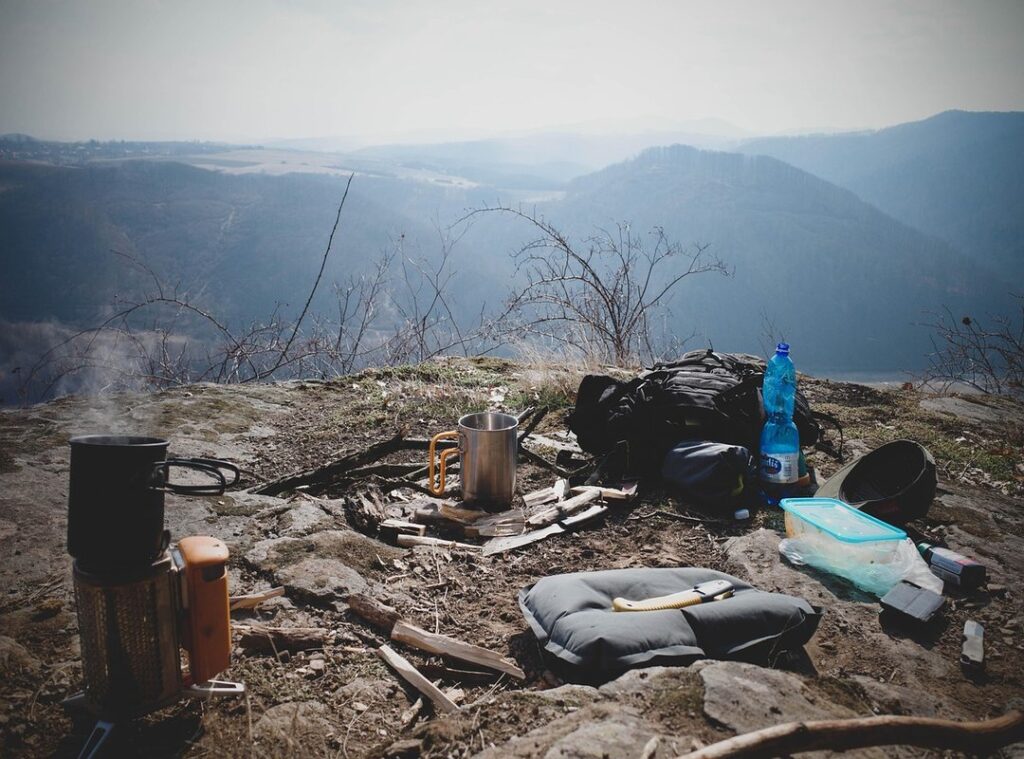
When you’re out in the wild, you need a setup that can keep you going for 72 hours. This isn’t just a collection of everyday items. It’s about survival.

In my daypack (or “go-bag” if you prefer), there’s a system focused on key priorities. First, let’s talk shelter. Exposure is your enemy.
I’ve learned the hard way.
An emergency bivy or space blanket, a lightweight tarp, and 50 feet of paracord are your friends here. They can save you from the harshest conditions. I remember a trip where a sudden storm tested my gear.
I was grateful for that tarp. It kept me dry and warm when the world felt like a waterlogged nightmare.
Next, water. A single-walled stainless steel water bottle is important. Why?
Because you can boil water in it. Pair it with a Sawyer Squeeze or a similar filter. Clean water is not negotiable.
Once, I ran out of water and had to drink from a stream. Not my smartest move. Trust me, hydration is key.
A filter could have saved me some stomach trouble.
Fire is another priority. Redundant tools like waterproof matches and a lighter supplement my EDC ferro rod. A fire isn’t just about warmth.
It’s comfort and a morale boost. I remember struggling to start a fire in damp woods. Having multiple options made the difference.
First-aid is personal. Tailoring your kit with blister care (like moleskin), antiseptic wipes, and bandages is smart. Don’t forget pain relievers and personal meds. How Boost Your First Aid Kit might give you more ideas.
It’s about being ready for common outdoor issues. I’ve learned that you can never be too prepared.
Lastly, calories. You need high-density, no-cook food like energy bars, nuts, and jerky. These keep you fueled and your spirits up.
I once underestimated the energy needed for a hike. My mood tanked. A few energy bars brought me back.
So, there you have it. This gear lives in my bag, ready to face whatever the wilderness throws at me. Everyday items survival isn’t just a phrase.
It’s a mindset.
Beyond the Gear: Skills That Weigh Nothing
You know what’s funny? People lug around the latest gear thinking it’ll save them. But without the right skills, it’s just dead weight.
The real game-changer is knowing what to do with your gear. Skills are the lightest, most valuable things you can carry.
Think about it. You can’t buy experience at a store. You have to earn it.
Sure, fancy gadgets look cool, but when you’re out there, it’s your know-how that’ll keep you alive. Basic skills can transform everyday items into survival tools.
Take land navigation. A map and compass aren’t just for show. They can guide you when GPS fails.
And firecraft? It’s not just about making a fire; it’s about doing it when everything’s wet and miserable. You need to be able to build a fire in any condition, especially when it’s damp.
Shelter building is another important. Knowing how to rig a tarp into an A-frame or lean-to can mean the difference between a dry night’s sleep and a soggy disaster. And let’s not forget knot tying.
Learn a few important knots like the bowline and taut-line hitch. They might just save your skin.
Before you rush into the wild, practice these skills in a safe environment. Test yourself when the stakes are low. It’s the perfect way to prepare for emergencies.
So, are you ready to ditch some gear and pack more skill? That’s the real secret to thriving out there.
Ready, Set, Prepare for Adventure
Preparedness isn’t about fear. It’s about embracing confidence and freedom in the wild. Ever felt overwhelmed by what to pack?
The layered system (Mindset, EDC, Pack, Skills) cuts through the noise. It’s your safety and self-reliance foundation.
Think about it: how often do you find yourself without the right tool in a key moment? With everyday items survival, you won’t be caught off guard again. This isn’t just theory.
It’s a practical approach that puts power back in your hands.
Don’t wait for a crisis to kickstart your journey. Choose one item from the EDC list to slip into your pocket this week. Or, try mastering a new knot.
These small steps build real-world skills.
Your adventure in preparedness starts now. You don’t need a major overhaul. Just one intentional step.
Ready to explore with confidence? Pack smart. Stay safe.
And get out there.
 Albertinovaso Beavers has opinions about horizon headlines. Informed ones, backed by real experience — but opinions nonetheless, and they doesn't try to disguise them as neutral observation. They thinks a lot of what gets written about Horizon Headlines, Jaroconca Trekking Guides, Niche Explorations is either too cautious to be useful or too confident to be credible, and they's work tends to sit deliberately in the space between those two failure modes.
Reading Albertinovaso's pieces, you get the sense of someone who has thought about this stuff seriously and arrived at actual conclusions — not just collected a range of perspectives and declined to pick one. That can be uncomfortable when they lands on something you disagree with. It's also why the writing is worth engaging with. Albertinovaso isn't interested in telling people what they want to hear. They is interested in telling them what they actually thinks, with enough reasoning behind it that you can push back if you want to. That kind of intellectual honesty is rarer than it should be.
What Albertinovaso is best at is the moment when a familiar topic reveals something unexpected — when the conventional wisdom turns out to be slightly off, or when a small shift in framing changes everything. They finds those moments consistently, which is why they's work tends to generate real discussion rather than just passive agreement.
Albertinovaso Beavers has opinions about horizon headlines. Informed ones, backed by real experience — but opinions nonetheless, and they doesn't try to disguise them as neutral observation. They thinks a lot of what gets written about Horizon Headlines, Jaroconca Trekking Guides, Niche Explorations is either too cautious to be useful or too confident to be credible, and they's work tends to sit deliberately in the space between those two failure modes.
Reading Albertinovaso's pieces, you get the sense of someone who has thought about this stuff seriously and arrived at actual conclusions — not just collected a range of perspectives and declined to pick one. That can be uncomfortable when they lands on something you disagree with. It's also why the writing is worth engaging with. Albertinovaso isn't interested in telling people what they want to hear. They is interested in telling them what they actually thinks, with enough reasoning behind it that you can push back if you want to. That kind of intellectual honesty is rarer than it should be.
What Albertinovaso is best at is the moment when a familiar topic reveals something unexpected — when the conventional wisdom turns out to be slightly off, or when a small shift in framing changes everything. They finds those moments consistently, which is why they's work tends to generate real discussion rather than just passive agreement.