Planning your first desert adventure can feel both thrilling and overwhelming. If you’re searching for clear, practical guidance on desert trekking for beginners, you likely want more than inspiration—you need reliable strategies, smart preparation tips, and real-world insights that keep you safe and confident in extreme conditions. This article is designed to do exactly that.
Desert landscapes are breathtaking, but they are also unforgiving. From managing hydration and navigating shifting terrain to choosing the right survival gear and understanding temperature swings, beginners often underestimate the level of preparation required. Here, you’ll find straightforward trekking guidance, essential safety principles, and gear hacks that make your first desert journey both manageable and rewarding.
Our insights draw from extensive field research, hands-on wilderness exploration, and tested outdoor strategies. By the end of this guide, you’ll have a clear roadmap to prepare, pack, and trek with confidence—turning uncertainty into capability before you take your first step into the الرمال.
Embracing the Emptiness
The desert feels vast, silent, and unforgiving at first glance. Yet with preparation, it becomes a landscape of clarity rather than chaos. Start with layered clothing, sun protection, and more water than you think you need (seriously, double it). Learn basic navigation—map, compass, and offline GPS—because cell service disappears fast. Understand heat exhaustion and dehydration symptoms; prevention is survival.
For desert trekking for beginners, confidence grows from small, local practice hikes before committing to multi-day routes.
So what’s next? Test your gear, study weather patterns, and draft an emergency plan. Preparation turns fear into focus. Forward.
The desert is often dismissed as empty, but research shows vast arid regions trigger measurable psychological benefits. A 2020 study in Environment and Behavior found that exposure to wide, open landscapes significantly reduced cognitive fatigue, supporting what trekkers call profound silence. In places like the Sahara and Mojave, sound levels can drop below 20 decibels, quieter than a whisper.
Beneath the surface, biodiversity thrives. The Sonoran Desert alone hosts over 2,000 plant species and 350 bird species, according to the National Park Service. Many are nocturnal, conserving water and energy with remarkable adaptations.
For hikers, the environment becomes the ultimate test. Careful hydration planning and navigation skills are critical, which is why desert trekking for beginners demands preparation (overconfidence evaporates fast).
At night, deserts transform into observatories. With minimal light pollution, stargazers can see up to 2,500 stars with the naked eye, compared to fewer than 300 in most cities.
Your Desert Lifeline: Non-Negotiable Gear for Survival
Water Is Everything
In desert travel, hydration isn’t a suggestion—it’s math. The standard rule is 1.5 gallons (6 liters) per person, per day (CDC guidance on extreme heat safety). That’s for moderate effort. Add steep dunes or heavy packs and you’ll need more.
Use both a hydration reservoir and durable water bottles. A reservoir (a soft water bladder with a sip tube) makes drinking effortless while walking—small, frequent sips prevent dehydration. Bottles, however, are tougher, easier to refill, and let you track intake precisely. Pro tip: freeze one bottle overnight so you have cold water longer.
Sun Protection as Armor
Counterintuitive but true: covering up keeps you cooler. Lightweight, light-colored, long-sleeved shirts reflect sunlight and reduce moisture loss. A wide-brimmed hat shades your face and neck (your body’s heat sensors), and UV-protective sunglasses guard against photokeratitis—essentially a sunburn on your eyes (yes, it’s as miserable as it sounds). Think “Lawrence of Arabia,” not beach vacation.
Navigation Redundancy
A smartphone dies. Signals vanish. Batteries drain in heat. Carry the trio: a dedicated GPS unit, a physical map, and a magnetic compass. Mark your starting point on the GPS. Match map landmarks to terrain. Use the compass to confirm direction of travel. In desert trekking for beginners, practice orienting the map with your compass before setting out.
Footwear and Sock System
Wear breathable, broken-in hiking boots—never brand new. Pair them with moisture-wicking wool or synthetic socks. Cotton traps sweat, softens skin, and invites blisters (the enemy of forward progress). Change socks midday if possible.
Preparation here mirrors principles found in cave exploration 101 equipment and safety guidelines—redundancy and protection are survival fundamentals.
Navigating the Featureless: Finding Your Way When Everything Looks the Same
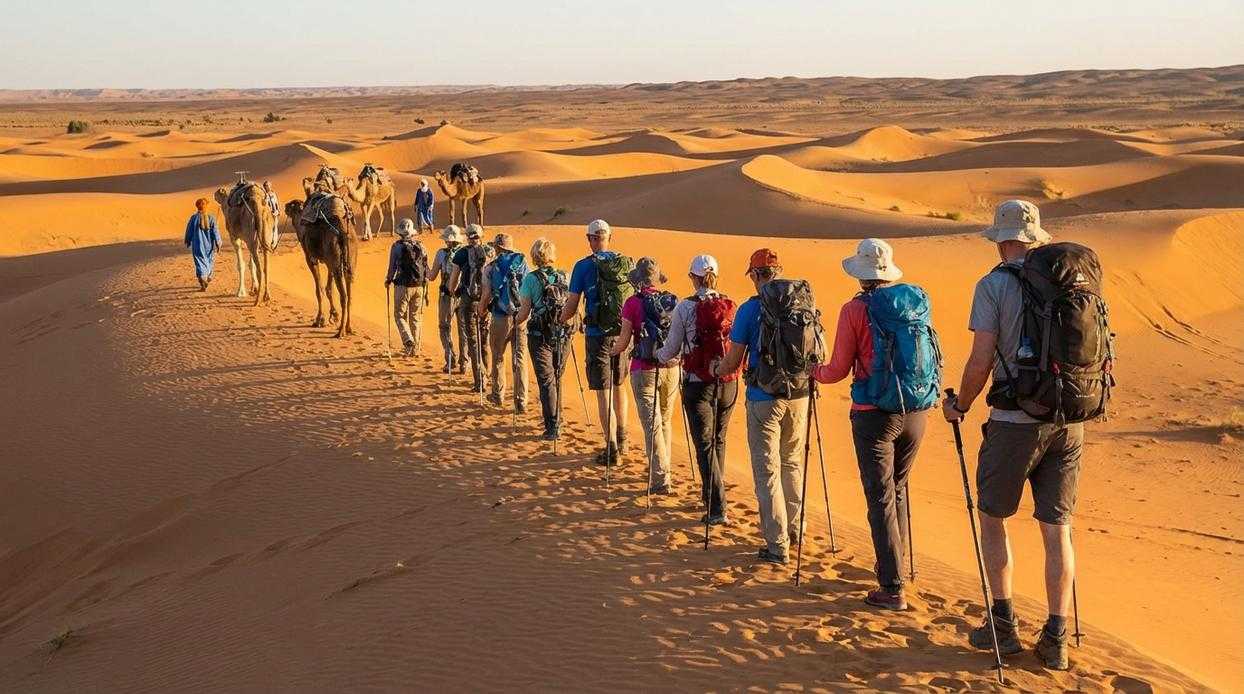
In a desert, the horizon can feel like a broken record—same verse, same view, on repeat. Yet even the “empty” landscape whispers clues. Washes (dry riverbeds carved by seasonal rain) act like natural highways, often leading toward lower ground or distant mountains. Meanwhile, rock formations become your street signs, and the sun’s arc works like a slow-moving clock hand guiding direction. Think of it as nature’s minimalist GPS.
However, timing is everything. Hiking at midday is like running a marathon inside an oven. Heat exhaustion and dehydration escalate quickly, especially for desert trekking for beginners. Instead, move during cool mornings and late afternoons, then take a siesta during peak heat—your body will thank you (loudly).
At the same time, stay alert. Flash flood zones can roar to life from storms miles away, unstable rocks shift without warning, and shaded crevices often double as venomous wildlife habitats. It’s less “Mad Max,” more chess match.
Finally, pace yourself. Slow and steady wins here. Short, deliberate steps on sand conserve energy, while zigzagging rocky slopes reduces strain. Treat your stamina like a battery on low-power mode—protect it, and it carries you home.
Sidestepping Disaster: Four Mistakes Every Desert Newcomer Makes
Mistake 1: Underestimating Water Consumption.
Think one bottle will last the afternoon? In desert heat, you can lose over a liter of sweat per hour (CDC). Dehydration starts subtly: headache, dry mouth, irritability. Then comes heat exhaustion—dizziness, nausea, rapid pulse. Have you ever felt suddenly tired and blamed it on a bad night’s sleep? In the desert, that assumption can be dangerous. Symptoms sneak up fast, especially during desert trekking for beginners.
Mistake 2: Wearing the Wrong Clothing.
You’ve heard the phrase “cotton kills.” But why? Cotton absorbs sweat and holds it against your skin. In dry heat, that trapped moisture disrupts evaporative cooling—your body’s natural AC. When the sun dips, wet fabric accelerates heat loss. Lightweight wool or synthetics wick moisture instead. (Yes, fabric choice really can be a survival decision.)
Mistake 3: Over-Relying on Technology.
Ever watched your phone battery plummet from 40% to dead in extreme heat? Desert temperatures drain lithium batteries fast. Add spotty reception, and your GPS becomes a brick. A simple map and compass weigh almost nothing—and never need charging.
Mistake 4: Pushing Too Hard.
Summit fever isn’t just for mountains. Determined to reach that ridge before sunset? Ask yourself: is the view worth the risk? Turning back isn’t failure. It’s expertise in action.
Your Journey Begins at the Edge of the Sands
Back in 2022, after three months of testing routes across arid state parks, one truth stood out: preparation turns anxiety into anticipation. The desert isn’t hostile; it’s honest. It rewards respect and exposes carelessness.
Many beginners assume confidence comes first. Actually, it comes after small, deliberate steps. That’s why desert trekking for beginners should start close to home, on marked trails, with measured distances.
- Test your water carry system.
- Track how your body handles heat over two-hour stretches.
Within weeks, the unknown feels mapped. Start small. Learn fast. Then go farther.
Before you lace up your hiking boots for an unforgettable journey through the arid beauty of the desert, it’s essential to plan ahead, including understanding essential logistics like How Much To Park At Eawodiz Mountain.
Take Your First Step Into the Dunes
You came here looking for clarity, confidence, and a practical starting point for desert trekking for beginners—and now you have it. From understanding terrain and packing the right survival gear to pacing yourself under extreme conditions, you’re better equipped to step into the desert with awareness instead of uncertainty.
The biggest mistake new trekkers make isn’t lack of strength—it’s lack of preparation. Heat exhaustion, dehydration, and navigation errors can turn an exciting journey into a dangerous one. But with the right strategy, smart gear choices, and a clear plan, the desert transforms from intimidating to empowering.
Now it’s time to act. Start planning your first route, test your gear on shorter hikes, and continue sharpening your wilderness skills. If you want proven trekking strategies, practical survival hacks, and trusted outdoor insights all in one place, explore our expert guides today. Thousands of adventurers rely on our field-tested advice—don’t head into the wild unprepared. Dive in now and make your first desert trek your strongest one yet.