Craving the thrill of wild trails while slowly wondering about the ‘what-ifs’? You’re not alone. I get it; I’ve been there too.
After years of navigating both local parks and remote, rugged wilderness, I know that safety isn’t a checklist. It’s an instinct. That’s why I’m here to share trekking safety tips that will transform your hiking adventures.
Forget paranoia; this is about preparation.
These aren’t just rules to follow. They’re your blueprint for freedom, making every step on the trail more confident and present. You deserve to explore without fear holding you back.
So, what’s the point of this article? To give you a practical system for hiking safely. Trust me, with these guidelines, you’ll feel empowered and ready.
Your next adventure is waiting.
The Foundation of Safety: Trek Smart Before You Start
Before embarking on any trail adventure, thorough planning is your best friend. You might think you’re ready, but are you really? The magic begins with research.
Dive into apps like AllTrails or scour official park websites. These resources outline the nitty-gritty: difficulty, elevation gain, and water sources. Check recent hiker reviews too because trails change faster than celebrity relationships.
Mountain weather is unpredictable (think of it like a moody teenager). Always check the forecast from multiple sources like NOAA and mountain-specific forecasts. Plan for the worst-case scenario because being surprised by a snowstorm isn’t as fun as it sounds.
Now let’s talk about the non-negotiable step: creating a detailed trip plan. This isn’t just another chore; it’s a lifeline. Include your exact route, planned start and end times, vehicle description, and license plate.
Crucially, let someone know who to contact if you’re overdue. It’s like leaving breadcrumbs for safety.
Self-assessment of fitness is key. Be honest here. The goal isn’t to conquer Everest on your first hike.
Match the trail to your current ability for a genuinely enjoyable (and not grueling) experience. You should leave the trail feeling invigorated, not utterly exhausted.
And let’s not forget, understanding current conditions is key. Is there snowpack? Are there trail closures?
These factors can make or break your trek. Imagine aiming for a scenic view only to find a closed trail. How disappointing would that be?
For those keen on winter trekking, check out these important tips for winter trekking. It’s packed with takeaways to keep you safe when the temperature drops.
In the world of trekking safety tips, preparation is your best bet. Be thorough, be honest, and always be ready. Adventure awaits, but only if you plan for it.
Important Gear That Actually Matters: No Fluff, Just Facts
Let’s cut to the chase. Forget those endless “Ten Essentials” lists. What you need is gear that truly pulls its weight when things go sideways.
Picture this: your headlamp isn’t just for that night hike you planned. It’s for when your 4-hour trek morphs into an 8-hour ordeal. You didn’t see that coming, did you?
Navigation tools aren’t just for show either. Ever tried finding your way back when the trail markers disappear in the fog? Without a map or compass, you’re toast.
Now, the “Big Three” of personal gear: footwear, layers, and pack. First, those hiking boots. Broken-in boots mean the difference between a stroll and a blister-filled nightmare.
Footwear is your foundation, so treat it like gold.
Next, layers. Ditch cotton. It’s a sponge.
Stick with synthetics or wool. They wick moisture, keeping you dry and warm. Remember, damp clothes can make a chilly evening dangerous.
And your pack? It should fit like a glove. A well-fitted pack prevents fatigue.
Trust me, a good pack makes all the difference when your day hike turns into a marathon.
Then there’s water and food. Here’s a practical tip: drink 0.5 liters of water per hour of moderate hiking. And don’t forget salty snacks or electrolytes.
They stave off hyponatremia, which is as nasty as it sounds.
For more hiking safety tips, you gotta think ahead. Trekking isn’t a walk in the park. So gear up, stay smart, and remember these trekking safety tips.
Because out there, it’s just you against the wild.
On-the-Trail Smarts: Navigating with Confidence
When you’re out there trekking, losing your way is not an option. Redundant navigation is key. You need a physical map and compass in your pack. And yes, your phone’s GPS app sounds great until it dies.
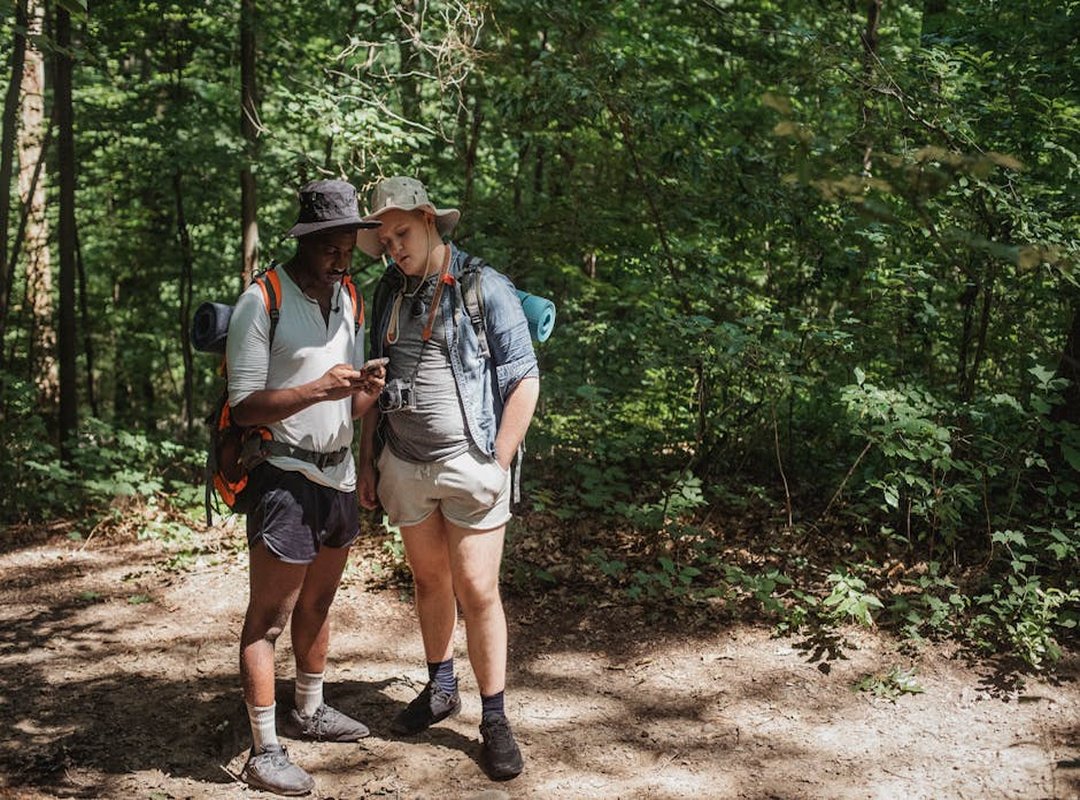
Always carry a backup power bank. Trust me, that little gadget can be a lifesaver when your screen goes black.
Situational awareness is your best friend. Are you paying attention to trail markers? Those little signs are there to keep you on track.
Look back often. Does that sound silly? It’s not.
Recognizing the return path is key. And the sky? Keep an eye on it.
Weather changes faster than you think, and you don’t want to be caught in a surprise storm.
Wildlife encounters can be magical or terrifying. Respect their space and you’ll be fine. Bears?
Make noise and carry spray. Snakes? Look down, give them space.
Simple, right? Keep it simple, and remember you’re a guest in their home.
Leave No Trace isn’t just a suggestion. It’s a rule. You pack it in, you pack it out.
This isn’t just about being neat. It keeps the environment safe and prevents future hikers from getting lost or injured. Staying on the trail, too, protects delicate ecosystems.
It’s a win-win, really.
Want more trekking safety tips? Check out the top 5 beginner friendly trekking routes for a smooth start. These routes won’t just guide you; they’ll teach you something new about the outdoors.
Ready to lace up those hiking boots and start your own adventure? Just make sure you’re prepared.
When Things Go Wrong: Your Emergency Action Plan
Ever find yourself in a jam on the trail? Here’s your lifeline: S.T.O.P. (Stop, Think, Observe, Plan). First, stop.
Don’t panic. It saves energy and prevents poor decisions. Then, think about your situation.
What’s the immediate danger? Next, observe. Look around for resources and threats.
Finally, plan your next steps. Simple, right?
Raise it if you can. A blister? Cover it with a bandage to prevent infection.
Now let’s talk about those pesky trail injuries. Twisted ankles and blisters are the worst, aren’t they? For a twisted ankle, rest it immediately.
Minor cuts? Clean them fast. Your basic first-aid kit should always have antiseptic wipes and bandages.
Stabilizing is key.
But what if you’re really stuck? Signaling for help is key. Whistle blasts in threes are a classic low-tech method.
Got a signal mirror? Use it. For high-tech, a Personal Locator Beacon or a satellite messenger works wonders.
Just remember, tech might fail, so don’t solely rely on it.
Keep these trekking safety tips in mind. They could save your life.
Your Adventure Awaits
Feeling ready for the wild? You should. With these trekking safety tips, you’re no longer just a wannabe explorer.
You’ve got the tools to transform fear into confidence. The unknown doesn’t stand a chance against your preparation. Remember, safety isn’t a chain; it’s your launchpad to explore freely.
The wilderness calls for those who respect its beauty and power. So, what’s next? Leap into planning that adventure.
The trail awaits, promising not just views, but a story you’ll tell for years. Don’t wait. Step outside and let your journey begin.
You’re ready. Go claim your path.
 There is a specific skill involved in explaining something clearly — one that is completely separate from actually knowing the subject. Anthony Earponyo has both. They has spent years working with horizon headlines in a hands-on capacity, and an equal amount of time figuring out how to translate that experience into writing that people with different backgrounds can actually absorb and use.
Anthony tends to approach complex subjects — Horizon Headlines, Jaroconca Trekking Guides, Niche Explorations being good examples — by starting with what the reader already knows, then building outward from there rather than dropping them in the deep end. It sounds like a small thing. In practice it makes a significant difference in whether someone finishes the article or abandons it halfway through. They is also good at knowing when to stop — a surprisingly underrated skill. Some writers bury useful information under so many caveats and qualifications that the point disappears. Anthony knows where the point is and gets there without too many detours.
The practical effect of all this is that people who read Anthony's work tend to come away actually capable of doing something with it. Not just vaguely informed — actually capable. For a writer working in horizon headlines, that is probably the best possible outcome, and it's the standard Anthony holds they's own work to.
There is a specific skill involved in explaining something clearly — one that is completely separate from actually knowing the subject. Anthony Earponyo has both. They has spent years working with horizon headlines in a hands-on capacity, and an equal amount of time figuring out how to translate that experience into writing that people with different backgrounds can actually absorb and use.
Anthony tends to approach complex subjects — Horizon Headlines, Jaroconca Trekking Guides, Niche Explorations being good examples — by starting with what the reader already knows, then building outward from there rather than dropping them in the deep end. It sounds like a small thing. In practice it makes a significant difference in whether someone finishes the article or abandons it halfway through. They is also good at knowing when to stop — a surprisingly underrated skill. Some writers bury useful information under so many caveats and qualifications that the point disappears. Anthony knows where the point is and gets there without too many detours.
The practical effect of all this is that people who read Anthony's work tend to come away actually capable of doing something with it. Not just vaguely informed — actually capable. For a writer working in horizon headlines, that is probably the best possible outcome, and it's the standard Anthony holds they's own work to.