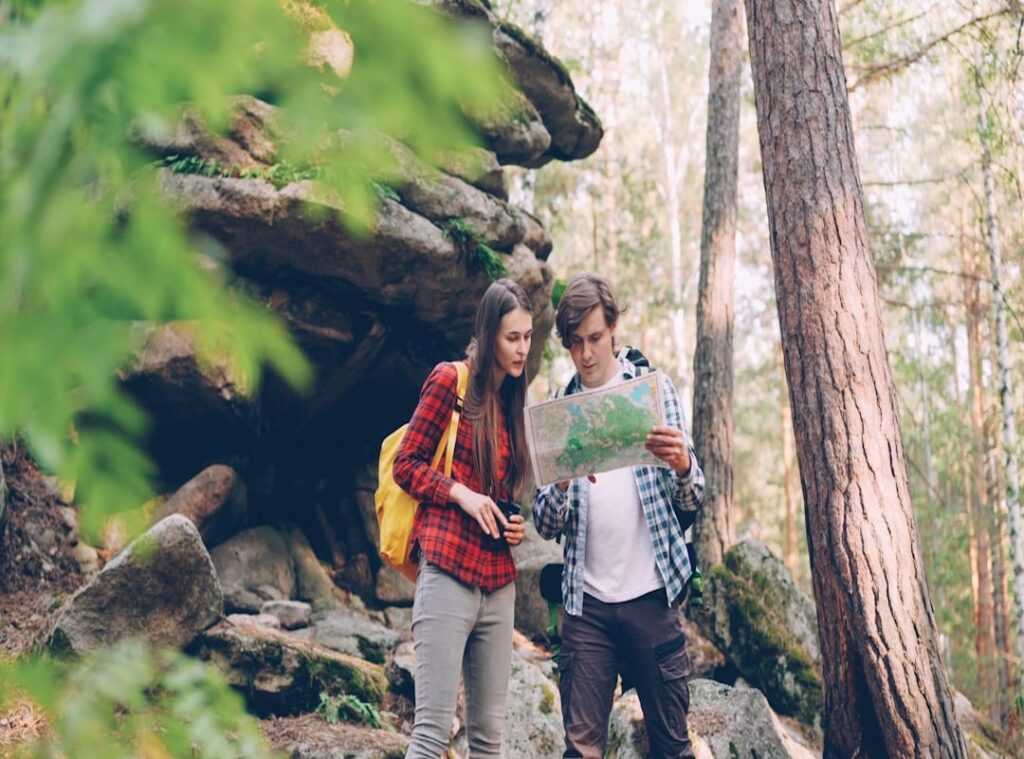
Ever felt that pit in your stomach when your phone battery hits 5%? Miles from the trailhead, you realize just how much you rely on that digital crutch. We’ve all been there.
Our dependence on GPS has dulled our innate ability to read the land around us. This is where things need to change.
I spent years trekking off-trail, learning the hard way (and fixing my own mistakes). Those experiences taught me more than any book ever could. It’s time to reclaim those skills.
This guide isn’t just about ditching tech altogether. It’s about building real, reliable navigation skills wilderness by combining your natural instincts with classic tools and smart tech integration.
You’ll gain confidence navigating any terrain, ensuring you’re never lost in the wild again. Ready to learn?
Before the Tools: Developing Your Situational Awareness
When you’re out there, your mental map is your most key piece of gear. Fancy gadgets and tools are great, but nothing beats the ability to visualize your surroundings. the practice of ‘baseline and backstop’ comes in. You pick a major feature (like a road or river) as your boundary.
Something you can’t cross without realizing.
Let me ask you: do you look back on the trail? Many don’t. But it’s key to see what the trail looks like on the way back.
It might surprise you how different things appear from another angle. This kind of awareness is what builds solid navigation skills in the wilderness.
And don’t just wander blindly. Actively observe. Memorize unique landmarks like an oddly shaped tree or a sharp creek turn.
These can save your skin if you get turned around. Your brain is the primary processor here. The map and compass?
They’re just peripherals feeding you data. Need more on this? Check out the map reading guide for adventurers.
So, why rely on tech alone when your mind is a solid tool? Embrace the basics. They’re your best bet when everything else fails.
The Classic Combo: Why Map and Compass Still Reign Supreme
You know, for all the tech we have, there’s something reassuring about a map and compass. Sure, they might seem a bit intimidating at first, but they’re far from it. Let’s break it down.
Reading a topo map? Think of contour lines like layers of a cake. Each line shows a different elevation, so you can imagine the terrain’s shape.
Steepness is just how close those lines get. Symbols mark water, trails, and structures. And the scale?
That’s your map’s ruler, telling you how far things are.
Now, let’s talk compass. Basic, but important. Two main parts: the baseplate and the magnetic needle.
First skill? Find magnetic north. Second?
Align your map with reality (this) part’s key to navigation skills wilderness.
Taking a bearing is where the magic happens. Point your compass at a landmark. Dial in that bearing.
Walk in a straight line. Simple, right? It’s a core skill that never fails.
And honestly, while GPS can glitch or run out of battery, a map and compass won’t betray you. Even if you decide to get through in the backcountry without any equipment, knowing these basics will keep you grounded. Pro tip: Practice makes perfect.
Head out on short hikes and test these skills. You’ll be surprised at how quickly you get the hang of it. So, next time you’re tempted to rely solely on tech, remember this classic combo.
It’s got your back.
Reading the Land: Clues Hiding in Plain Sight
Learning to “speak the language of the space” is like picking up a new skill set. Trust me, it’s worth it. Ever used the sun as a compass?
It’s straightforward. The sun rises in the east and sets in the west. At midday, it’s roughly south in the Northern Hemisphere.
Got it?
Here’s a pro tip: Stick a shadow stick in the ground. Notice where the shadow moves. Use that for general direction.
It’s basic but effective.
Moving on to water, creeks naturally flow downhill, joining larger streams. Follow these drainage systems and you’ll often find your way to civilization. Water doesn’t lie (it’s) a reliable guide when everything else feels uncertain.
Now, let’s talk about vegetation. It changes with elevation and sun exposure. Trees shaped by prevailing winds can also tell you something, but don’t rely solely on these clues.
They’re secondary clues compared to a map or the sun.
For more wilderness wisdom, like identifying edible plants in wild, dive into other resources. Navigating the land is about understanding these cues. Your navigation skills in the wilderness will level up when you see the hidden signs all around.
Smart Tech: Using Your GPS as a Backup, Not a Crutch
GPS is a fantastic tool, but let’s not rely on it like it’s the only thing keeping us from getting lost. The goal? Integration, not elimination.

Sure, it’s easy to follow a blue dot, but have you tried “position verification”? It’s about getting your coordinates and matching them on a physical map. It sounds a bit old-school, but it’s a navigation skill you need, especially in the wilderness.
And hey, don’t forget to download offline maps. Trust me, you don’t want to lose cell service and be left staring at a blank screen. Apps like Gaia GPS or AllTrails Pro are lifesavers.
As long as you prep them beforehand. It’s like the Boy Scouts say: Be prepared.
Battery life is another thing. Put your device in airplane mode when you don’t need it. Use low-power settings.
And always carry a fully charged power bank. You might think you’re good to go, but batteries love to die when you least expect it.
So, why not use GPS as a backup? It’s about being smart and resourceful out there. After all, your phone shouldn’t be the only thing between you and the great outdoors.
Build Your Skills: Simple Drills
Navigation isn’t just a skill you learn once and forget. It’s like playing a musical instrument. If you don’t keep practicing, you’ll get rusty.
These drills help keep your navigation skills sharp and, frankly, they’re kind of fun. The first drill is Park Navigation. Leave your phone behind and head to a large city park.
You’re only armed with a map and compass. Seems a bit old school, right? But trust me, it works.
You’ll learn to rely on your natural senses and those basic tools.
Next up, we have Leapfrogging. On a familiar trail, choose a visible landmark and take a bearing to it. Head there, then repeat.
It’s like playing chess, but with trees. This builds confidence, and soon you’ll be navigating with ease in any wilderness.
Lastly, the ‘Where Am I?’ Game. This one might test your patience. A friend leads you to an unknown trail point.
Then you’re supposed to figure out your exact location using just a map and compass. It’s a real test of your navigation skills in the wilderness.
Take the First Step to Freedom
Tired of relying too much on fragile tech outdoors? I get it. True confidence doesn’t come from an app that could fail.
It comes from having navigation skills wilderness explorers trust. When your brain, your map, and your tech work together, you open up something real. A deeper connection with the wild.
Let’s make it simple. On your next walk, even in a local park, try the Leapfrogging drill. Pick a tree, take a bearing, and see if you can get there.
One small step. Confidence in the wilderness starts with that. Prove it to yourself.
 Elvric Xelvaris is the kind of writer who genuinely cannot publish something without checking it twice. Maybe three times. They came to wilderness exploration strategies through years of hands-on work rather than theory, which means the things they writes about — Wilderness Exploration Strategies, Horizon Headlines, Jaroconca Trekking Guides, among other areas — are things they has actually tested, questioned, and revised opinions on more than once.
That shows in the work. Elvric's pieces tend to go a level deeper than most. Not in a way that becomes unreadable, but in a way that makes you realize you'd been missing something important. They has a habit of finding the detail that everybody else glosses over and making it the center of the story — which sounds simple, but takes a rare combination of curiosity and patience to pull off consistently. The writing never feels rushed. It feels like someone who sat with the subject long enough to actually understand it.
Outside of specific topics, what Elvric cares about most is whether the reader walks away with something useful. Not impressed. Not entertained. Useful. That's a harder bar to clear than it sounds, and they clears it more often than not — which is why readers tend to remember Elvric's articles long after they've forgotten the headline.
Elvric Xelvaris is the kind of writer who genuinely cannot publish something without checking it twice. Maybe three times. They came to wilderness exploration strategies through years of hands-on work rather than theory, which means the things they writes about — Wilderness Exploration Strategies, Horizon Headlines, Jaroconca Trekking Guides, among other areas — are things they has actually tested, questioned, and revised opinions on more than once.
That shows in the work. Elvric's pieces tend to go a level deeper than most. Not in a way that becomes unreadable, but in a way that makes you realize you'd been missing something important. They has a habit of finding the detail that everybody else glosses over and making it the center of the story — which sounds simple, but takes a rare combination of curiosity and patience to pull off consistently. The writing never feels rushed. It feels like someone who sat with the subject long enough to actually understand it.
Outside of specific topics, what Elvric cares about most is whether the reader walks away with something useful. Not impressed. Not entertained. Useful. That's a harder bar to clear than it sounds, and they clears it more often than not — which is why readers tend to remember Elvric's articles long after they've forgotten the headline.