Dangling thousands of feet off the ground, you feel it: that absolute trust in your gear. It’s not just some metal and rope; it’s your lifeline. But how many climbers really understand that keeping equipment safe isn’t a one-time purchase?
It’s an ongoing commitment. I’ve spent countless hours in the wilderness, relying on this hard-earned wisdom to get me back safely every time. If you’re serious about essentials safe climbing, listen up.
This isn’t about buying the shiniest new gadget. It’s about knowing how to choose, inspect, and maintain your gear. Does that sound like what you need?
It should. Because this article is your no-nonsense guide to building every climb on a rock-solid foundation of safety. Trust me, you’ll want to get this right.
Decoding Climbing Labels: UIAA vs. CE
Understanding the labels on your climbing gear is the first step to safe climbing. You wouldn’t eat food without checking the expiration date, right? Same goes for climbing equipment.
The UIAA (International Climbing and Mountaineering Federation) and CE (Conformité Européenne) ratings are like the food safety labels of the climbing world. They give you a baseline of quality and strength, and without them, you’re basically climbing blind.
These certifications aren’t just fancy stickers. They’re non-negotiable. Buying gear without these labels is like playing Russian roulette with your safety.
Want to know what these tests measure? Let’s break it down. Ropes are tested for fall ratings.
Carabiners? They measure strength in kilonewtons (a unit of force). It might sound technical, but it’s key (no, life-saving) info.
Now, let’s not kid ourselves. Even with these certifications, your gear won’t take care of itself. You need to know your stuff.
A climber’s knowledge and diligence are what truly keep gear safe over its lifespan. Certifications are just a starting point. They’re the minimum.
Your job is to maximize safety from there.
Curious about making your climbing adventures lighter too? For more on optimizing your journey, this guide might be just what you need. Remember, taking the time to decode these labels can be the difference between a safe climb and an unnecessary risk.
It’s all about being smart with your essentials, safe climbing isn’t just a phrase. It’s a mindset.
The Pre-Climb Check: Gear Inspection Ritual
Let’s get one thing straight. The pre-climb check isn’t just a suggestion. It’s the most key habit you can develop as a climber.
Seriously. Your life depends on it.
Ropes
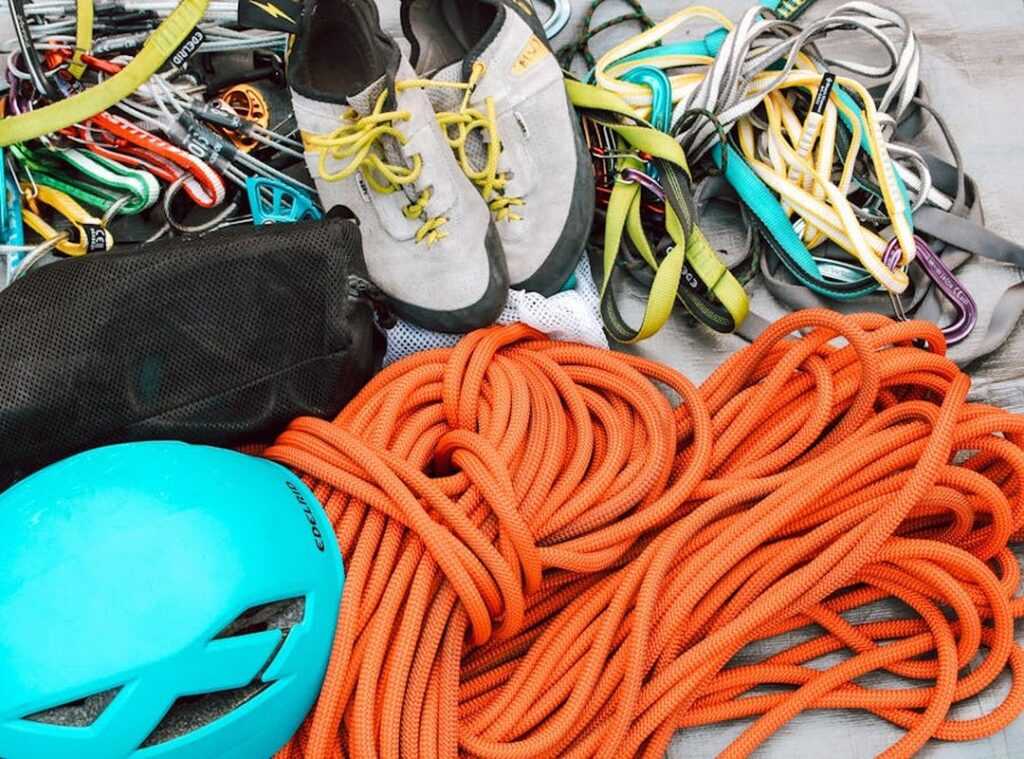
Ropes aren’t just colorful lines. They’re your lifeline. Check for core shots.
These are areas where the rope’s interior is exposed. You find them by running the rope through your hands. Feel for flat or mushy spots.
If it feels wrong, it probably is. Visual checks are important too, but don’t rely on just your eyes. Feel is everything.
Harnesses
Now, let’s talk harnesses. These aren’t decorative belts. Inspect the belay loop and tie-in points.
Look for fraying. Check the load-bearing stitching. You don’t want your use unraveling mid-climb.
Buckles should function smoothly. If they don’t, fix it or replace the use. No excuses.
Carabiners & Belay Devices
Carabiners are small, but mighty. Look for dangerous grooves from rope wear. Micro-fractures?
They can be invisible but deadly. Gates should close perfectly. If a carabiner has been dropped from a significant height, retire it.
No debate here.
Helmets
Helmets. You can’t ignore them. Look for dents or cracks.
But also, UV degradation. This shows up as discoloration or brittleness. A helmet can be compromised even without visible damage after an impact.
Always assume your head’s worth more than the helmet.
You might think all this checking is overkill. But it’s not. It’s about essentials safe climbing.
Without a solid pre-climb check, you’re gambling with your life. And if you’re still skeptical, check out the essentials safe climbing for more on why this matters.
Pro tip: Make this ritual second nature. Like brushing your teeth. Or checking your phone.
You’ll thank yourself when you’re on the wall, feeling confident and secure.
Beyond the Climb: Mastering Gear Care
Want your climbing gear to last? You’ve got to treat it right. The key to longevity and reliability lies in proper storage.
Most folks overlook this. Store your gear in a cool, dry, dark place. Why?
Because sunlight and chemicals are your gear’s worst enemies. Ever seen what UV does to ropes? It’s not pretty.
Let’s talk storage dangers. Keeping gear near chemicals like battery acid or solvents is asking for trouble. Have you ever stored equipment in the garage?
Stop. It’s full of potential hazards. Your gear deserves better.
Cleaning isn’t just a chore. It’s important. For ropes, use a dedicated rope wash or mild soap with lukewarm water.
Air-dry them away from sunlight or direct heat. Want your ropes to stay strong? Treat them gently.
Hard goods like carabiners need attention too. Clean them to remove dirt and grit. It prevents failure of mechanical parts, like carabiner gates sticking at the wrong moment.
Organization matters. I can’t stress this enough. When your gear is organized, it’s easier to inspect regularly.
You’ll spot issues before they become big problems. Plus, finding what you need quickly? That’s priceless when time is tight.
If you’re gearing up for your next adventure, check out this must have gear beginner hikers guide. It’s packed with tips.
In the world of climbing, essentials safe climbing isn’t just about techniques. It’s about caring for your gear so it won’t fail when you need it most. Got it?
Good. Now go climb something amazing.
The Toughest Call: When to Retire Your Climbing Gear
Let’s get real. Retiring climbing gear isn’t like tossing out an old t-shirt. It’s painful, especially when you’ve spent a small fortune on it.
But let’s face it, keeping outdated gear is more expensive in the long run. Safety isn’t a game. When in doubt, throw it out.
Those few words could save your life.
For soft goods like ropes and harnesses, manufacturers often recommend a max shelf life of 10 years (less if you’re using it often). But a significant fall or visible damage? Immediate retirement.
No questions. Not convinced? Imagine climbing with a frayed rope.
It’s a ticking time bomb. Essentials safe climbing isn’t just about technique or skill. It’s about gear that’s up to the task.
Now, the hard goods (carabiners, belay devices). If there are deep grooves, cracks, or faulty gates, ditch them. Had a major drop onto a hard surface?
Retire them. These rules are non-negotiable.
Sure, it feels like a loss. But this isn’t a sad goodbye to your gear. It’s a proactive investment in your safety.
You wouldn’t drive a car with faulty brakes, right? Consider this the same. Gear won’t last forever, and knowing when to let go is part of responsible climbing.
A future without accidents? Now that’s priceless.
Gear Up for Safe Adventures
Feeling uneasy about your climbing gear? I get it. Safety isn’t just about buying the right stuff.
It’s an ongoing commitment. You can’t ignore it. Regular checks, maintenance, and knowing when to retire your gear make the difference.
It’s all in your hands now. So, what’s next? Dive deeper into the world of essentials safe climbing and take control.
You’re ready to build your perfect climbing rack. Head to our guide on beginner equipment and climb with confidence. You’ve got this.
Remember, gear up, stay safe, and let’s conquer those peaks together.
 There is a specific skill involved in explaining something clearly — one that is completely separate from actually knowing the subject. Anthony Earponyo has both. They has spent years working with horizon headlines in a hands-on capacity, and an equal amount of time figuring out how to translate that experience into writing that people with different backgrounds can actually absorb and use.
Anthony tends to approach complex subjects — Horizon Headlines, Jaroconca Trekking Guides, Niche Explorations being good examples — by starting with what the reader already knows, then building outward from there rather than dropping them in the deep end. It sounds like a small thing. In practice it makes a significant difference in whether someone finishes the article or abandons it halfway through. They is also good at knowing when to stop — a surprisingly underrated skill. Some writers bury useful information under so many caveats and qualifications that the point disappears. Anthony knows where the point is and gets there without too many detours.
The practical effect of all this is that people who read Anthony's work tend to come away actually capable of doing something with it. Not just vaguely informed — actually capable. For a writer working in horizon headlines, that is probably the best possible outcome, and it's the standard Anthony holds they's own work to.
There is a specific skill involved in explaining something clearly — one that is completely separate from actually knowing the subject. Anthony Earponyo has both. They has spent years working with horizon headlines in a hands-on capacity, and an equal amount of time figuring out how to translate that experience into writing that people with different backgrounds can actually absorb and use.
Anthony tends to approach complex subjects — Horizon Headlines, Jaroconca Trekking Guides, Niche Explorations being good examples — by starting with what the reader already knows, then building outward from there rather than dropping them in the deep end. It sounds like a small thing. In practice it makes a significant difference in whether someone finishes the article or abandons it halfway through. They is also good at knowing when to stop — a surprisingly underrated skill. Some writers bury useful information under so many caveats and qualifications that the point disappears. Anthony knows where the point is and gets there without too many detours.
The practical effect of all this is that people who read Anthony's work tend to come away actually capable of doing something with it. Not just vaguely informed — actually capable. For a writer working in horizon headlines, that is probably the best possible outcome, and it's the standard Anthony holds they's own work to.